|
1020 Regent St
(Lower Level)
Madison, WI 53715
|
| |
|
Click above to send names of those to be commemorated at Liturgy. |
| |
Sunday, March 3, 2024
Tone 6
39th Sunday after Pentecost; Sunday of the Prodigal Son |
| |
Sunday of the Prodigal Son
Commemorated on March 3
Introduction
(GOARCH) The Sunday of the Prodigal Son is the second Sunday of a three-week period prior to the commencement of Great Lent. On the previous Sunday, the services of the Church began to include hymns from the Triodion, a liturgical book that contains the services from the Sunday of the Publican and the Pharisee, the tenth before Pascha (Easter), through Great and Holy Saturday. As with the Sunday of the Publican and the Pharisee, the theme of this Sunday is repentance, and the focus on the parable of the Prodigal Son leads Orthodox Christians to contemplate the necessity of repentance in our relationship with our Heavenly Father.
Biblical Story
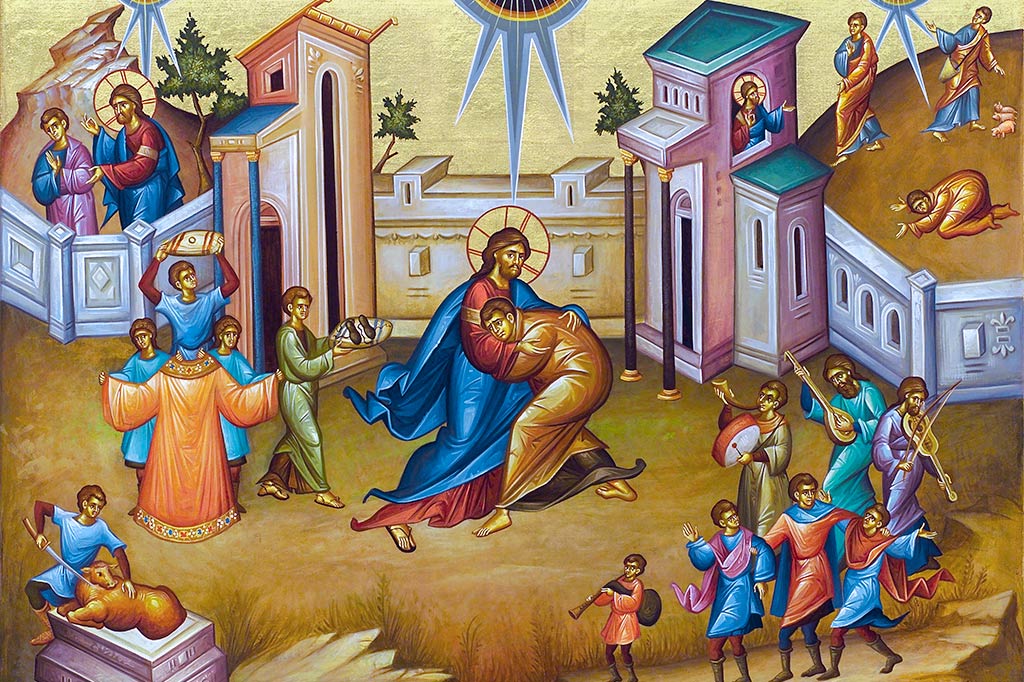
 The name for this Sunday is taken from the parable of our Lord Jesus Christ found in Luke 15:11-32. The parable is the story of a man and his two sons. The youngest of the sons asks his father to give him his inheritance. The father does this, and soon after the son leaves and journeys to a distant country (vv. 11-13). The name for this Sunday is taken from the parable of our Lord Jesus Christ found in Luke 15:11-32. The parable is the story of a man and his two sons. The youngest of the sons asks his father to give him his inheritance. The father does this, and soon after the son leaves and journeys to a distant country (vv. 11-13).
After the younger son arrives, he squanders all of his possessions with “prodigal” living. Within a short period of time, he wastes everything. A severe famine comes, but he has nothing and falls into great need (vv. 13-14).
He is able to find work feeding swine, but this does not improve his situation. The Scriptures say, “He would gladly have filled his stomach with the pods that the swine ate, but no one gave him anything” (vv. 15-16).
The parable says that in the midst of his dire conditions, he came to himself. He realized that his father’s hired servants have enough to eat and food to spare, while he perishes with hunger. He says, “I will arise and go to my father and will say to him, ‘Father, I have sinned against heaven and before you, and I am no longer worthy to be called your son. Make me like one of your hired servants’” (vv. 17-19).
He arose and returned to his father. But as he approached, his father saw him at a great distance. The father had compassion on his son, ran to meet him, embraced him, and kissed him. The son admitted his sinfulness and his unworthiness to be called a son, but in his joy at the return of his son, the father called his servants to bring the best robe, a ring for his son’s finger, and sandals for his feet. He also called for the fatted calf to be killed for a feast. He exclaimed, “For this my son was dead and is alive again; he was lost and is found” (vv. 20-24).
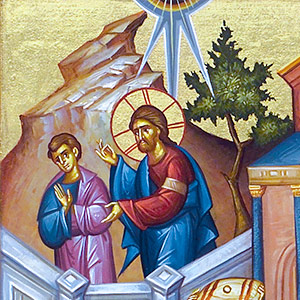 While they were feasting and celebrating the return of the prodigal son, the older son comes and inquires about what is happening. He is told that his brother had returned and that his father has received him with a feast. The older brother becomes angry and will not go in to the feast. The father comes out and pleads with him, but the older son answers by saying he has been faithful to his father for many years and yet the father never gave him the opportunity for such feasting. He expresses his anger and jealousy over his brother who was received in such a manner after he squandered his inheritance (vv. 25-30). While they were feasting and celebrating the return of the prodigal son, the older son comes and inquires about what is happening. He is told that his brother had returned and that his father has received him with a feast. The older brother becomes angry and will not go in to the feast. The father comes out and pleads with him, but the older son answers by saying he has been faithful to his father for many years and yet the father never gave him the opportunity for such feasting. He expresses his anger and jealousy over his brother who was received in such a manner after he squandered his inheritance (vv. 25-30).
The father responds by telling his oldest son, “You are always with me, and all that I have is yours. It was right that we should make merry and be glad, for your brother was dead and is alive again, and was lost and is found” (vv. 31-32).
The parable of the Prodigal Son forms an exact icon of repentance at its different stages. Sin is exile, enslavement to strangers, hunger. Repentance is the return from exile to our true home; it is to receive back our inheritance and freedom in the Father’s house. But repentance implies action: “I will rise up and go…” (v. 18). To repent is not just to feel dissatisfied, but to make a decision and to act upon it.
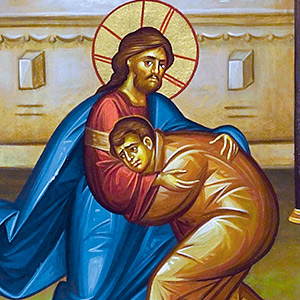 In the words of our Lord, we also learn of three things through this parable: the condition of the sinner, the rule of repentance, and the greatness of God’s compassion. The reading of this parable follows the Sunday of the Publican and the Pharisee so that, seeing in the person of the Prodigal Son our own sinful condition, we might come to our senses and return to God through repentance. For those who have fallen into great despair over their sins thinking that there is no forgiveness, this parable offers hope. The Heavenly Father is patiently and lovingly waiting for our return. There is no sin that can overcome His love for us. In the words of our Lord, we also learn of three things through this parable: the condition of the sinner, the rule of repentance, and the greatness of God’s compassion. The reading of this parable follows the Sunday of the Publican and the Pharisee so that, seeing in the person of the Prodigal Son our own sinful condition, we might come to our senses and return to God through repentance. For those who have fallen into great despair over their sins thinking that there is no forgiveness, this parable offers hope. The Heavenly Father is patiently and lovingly waiting for our return. There is no sin that can overcome His love for us.
Finally, this parable offers us insight into the world in which we live. It is a world where the activities of people are disconnected and not ordered toward the fulfillment of God’s divine purpose for life. It is a world of incoherent pursuits, of illusory strivings, of craving for foods and drinks that do not satisfy, a world where nothing ultimately makes sense, and a world engulfed in untruth, deceit and sin. It is the exact opposite of the world as created by God and potentially recreated by his Son and Spirit. There is no cure for the evils of our age unless we return to God. The world in which we live is not a normal world, but a wasteland. This is why in the Slavic tradition of the Orthodox Church the reading of Psalm 137 is added to the Matins service for this and the following two Sundays. This nostalgic lament of the Hebrew exiles states: "By the streams of Babylon we sat and wept as we remembered Zion. On the willows we hung our harps, for how could we sing the Lord’s song in a strange land” (Psalm 137).
Here we can see the challenge of life in this world and the alienation from God that can happen when sin reigns in our lives. As a result of sin in our lives, we lose the joy of communion with God, we defile and lose our spiritual beauty, and we find ourselves far away from our real home, our real life. In true repentance, we realize this, and we express a deep desire to return, to recover what has been lost. On this day the Church reminds us of what we have abandoned and lost, and beckons us to find the desire and power to return. Our Heavenly Father is waiting and ready to receive us with His loving forgiveness and His saving embrace.
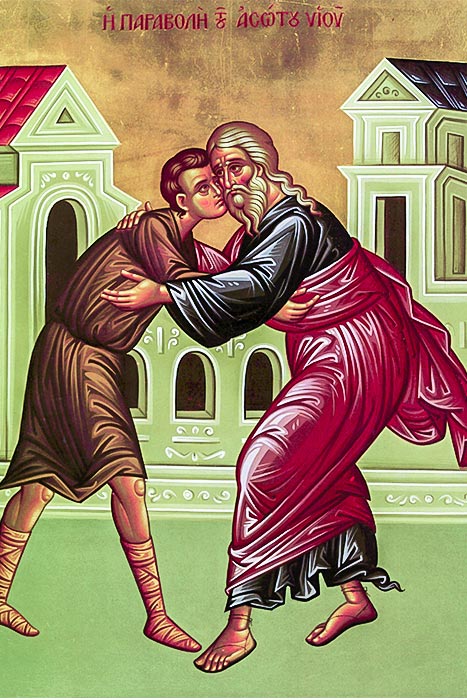
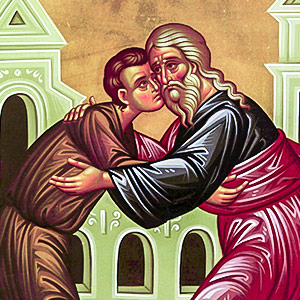 Icon of the Feast Icon of the Feast
The icon of the Sunday of the Prodigal Son shows the prodigal being received by his father upon his return. We are presented with an image of a warm and loving embrace, the son showing his need for his father, an attitude that represents repentance, love, and hope for renewal and restoration. The father is shown full of compassion for his son, having born the burden of his sin and suffering, but now filled with joy that he has returned. |
| |
|
Glory to Jesus Christ!
A very quiet week here at SSCM. Nothing extra is scheduled.
Looking ahead, we'll have an Akathist to our Lady, Queen of All, 5:30 pm, Thursday, March 7. If you have people you'd like remembered for healing of body or soul, please submit their names here.
In Christ,
Fr Gregory |
| |
This Week at Ss Cyril & Methodius
Wednesday, February 28
- 11:00 AM-3:00 PM: Office Hours/Confessions
Thursday, February 29
- 2:00-6:00 PM: Office Hours/Confessions
- 6:30 PM: OCF Meeting
Saturday, October 2
- 3:30 PM: Catechumen Class
- 4:30 PM: Confessions
- 5:00 PM: Great Vespers
- 6:00 PM: Confessions
Sunday, October 3
- 9:00 AM: Hours & Precommunion Prayers
- 9:30 AM: Divine Liturgy
|
| |
Looking Ahead
Wednesday, March 5
- 11:00 AM-3:00 PM: Office Hours/Confessions
Thursday, March 7
- 2:00-5:00 PM: Office Hours/Confessions
- 5:30 PM: Akathist to our Lady Queen of All (submit names here)
- 6:30 PM: OCF Meeting
Saturday, October 9: Soul Saturday
- 3:30 PM: Catechumen Class
- 4:30 PM: Confessions
- 5:00 PM: Great Vespers
- 6:00 PM: Confessions
Sunday, October 10
- 9:00 AM: Hours & Precommunion Prayers
- 9:30 AM: Divine Liturgy
|
| |
Hymns After the Small Entrance
Tone 6 Troparion (Resurrection)
The Angelic Powers were at Thy tomb; the guards became as dead men. Mary stood by Thy grave, seeking Thy most pure body. Thou didst capture hell not being tempted by it.
Thou didst come to the Virgin, granting life. O Lord, Who didst rise from the dead,//glory to Thee.
Tone 4 Troparion (Ss Cyril and Methodius)
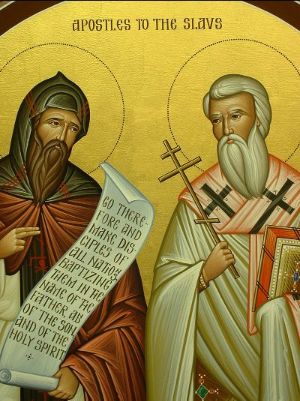
Divinely-wise Cyril and Methodius, / equals-to-the-apostles and teachers of the Slavs, / entreat the Master of all / to strengthen all nations in Orthodoxy and unity of mind, / to grant peace to the world and to save our souls.
Glory to the Father, and to the Son, and to the Holy Spirit,
Tone 3 Kontakion (Ss Cyril and Methodius)
Let us honor the sacred pair, who translated divine scripture / pouring forth a fountain of divine knowledge from which we still draw today. / Now as you stand before the throne of the Most-high / we call you blessed, Cyril and Methodius, / as you fervently pray for our souls.
now and ever, and unto ages of ages. Amen.
Tone 3 Kontakion (from the Lenten Triodion)
I have recklessly forgotten Thy glory, O Father; and among sinners I have scattered the riches which Thou gavest me. And now I cry to Thee as the Prodigal: “I have sinned before Thee, O merciful Father; receive me as a penitent, // and make me as one of Thy hired servants!” |
| |
|
Epistle: 1 Corinthians 6:12-20
Brethren, All things are lawful for me, but all things are not helpful. All things are lawful for me, but I will not be brought under the power of any. Foods for the stomach and the stomach for foods, but God will destroy both it and them. Now the body is not for sexual immorality but for the Lord, and the Lord for the body. And God both raised up the Lord and will also raise us up by His power.
Do you not know that your bodies are members of Christ? Shall I then take the members of Christ and make them members of a harlot? Certainly not! Or do you not know that he who is joined to a harlot is one body with her? For “the two,” He says, “shall become one flesh.” But he who is joined to the Lord is one spirit with Him.
Flee sexual immorality. Every sin that a man does is outside the body, but he who commits sexual immorality sins against his own body. Or do you not know that your body is the temple of the Holy Spirit who is in you, whom you have from God, and you are not your own? For you were bought at a price; therefore glorify God in your body and in your spirit, which are God’s.
Gospel: Luke 15:11-32
Then He said: “A certain man had two sons. And the younger of them said to his father, ‘Father, give me the portion of goods that falls to me.’ So he divided to them his livelihood. And not many days after, the younger son gathered all together, journeyed to a far country, and there wasted his possessions with prodigal living. But when he had spent all, there arose a severe famine in that land, and he began to be in want. Then he went and joined himself to a citizen of that country, and he sent him into his fields to feed swine. And he would gladly have filled his stomach with the pods that the swine ate, and no one gave him anything.
“But when he came to himself, he said, ‘How many of my father’s hired servants have bread enough and to spare, and I perish with hunger! I will arise and go to my father, and will say to him, “Father, I have sinned against heaven and before you, and I am no longer worthy to be called your son. Make me like one of your hired servants.” ’
“And he arose and came to his father. But when he was still a great way off, his father saw him and had compassion, and ran and fell on his neck and kissed him. And the son said to him, ‘Father, I have sinned against heaven and in your sight, and am no longer worthy to be called your son.’
“But the father said to his servants, ‘Bring out the best robe and put it on him, and put a ring on his hand and sandals on his feet. And bring the fatted calf here and kill it, and let us eat and be merry; for this my son was dead and is alive again; he was lost and is found.’ And they began to be merry.
“Now his older son was in the field. And as he came and drew near to the house, he heard music and dancing. So he called one of the servants and asked what these things meant. And he said to him, ‘Your brother has come, and because he has received him safe and sound, your father has killed the fatted calf.’
“But he was angry and would not go in. Therefore his father came out and pleaded with him. So he answered and said to his father, ‘Lo, these many years I have been serving you; I never transgressed your commandment at any time; and yet you never gave me a young goat, that I might make merry with my friends. But as soon as this son of yours came, who has devoured your livelihood with harlots, you killed the fatted calf for him.’
“And he said to him, ‘Son, you are always with me, and all that I have is yours. It was right that we should make merry and be glad, for your brother was dead and is alive again, and was lost and is found.’ ”
++++++++++++++++++++++
Communion Hymn
Praise the Lord from the heavens, praise Him in the highest!
Alleluia, Alleluia, Alleluia! |
| |
|
By the age of 25, about 60% of those baptized as infants will no longer consider themselves members of the Orthodox Church. A parish on a university campus is an important witness not only to the surrounding community but also to high school age and younger parishioner. Establishing a parish on the campus of the University of Wisconsin-Madison helps remind young people that graduating high school doesn't mean "graduating" from the Church. Please consider joining those who have committed their time, treasure and talent in establishing an Orthodox community on the Isthmus.
Please help us reach your children and grandchildren with the Gospel of Jesus Christ by clicking the gofundme link. |
| |
|